


Sculptra Biostimulator Injections in Fort Myers, FL
Sculptra in Fort Myers works differently than a typical injectable. Instead of adding volume the moment the needle comes out, it triggers your own body to rebuild the collagen that thins with age, so your cheeks, temples, and jawline fill back in gradually over the following months. At Hideout Boutique, Lina uses Sculptra for patients who want their volume loss corrected without looking like they just left an injector’s office. The trade off for that natural progression is patience: you won’t see the full change in the mirror the next morning, but the collagen your body produces keeps working for you long after the appointment ends, which is why the results outlast most fillers.
How Sculptra Injections Work
Sculptra is poly-L-lactic acid, a biocompatible, biodegradable material that has been used safely in medicine for decades before it was adapted for cosmetic use. Injected into the deeper layers of the skin, it doesn’t sit there and add bulk the way a hyaluronic acid filler does. Instead it stimulates fibroblasts, the cells responsible for collagen production, prompting your skin to manufacture new collagen fibers of its own over the following weeks and months. That new collagen is what restores structure to areas that have thinned, rather than a synthetic gel providing the shape from the outside.
Sculptra Treatment Areas: Cheeks, Temples & Jawline
Lina places Sculptra in the areas where age related volume loss shows up first: hollowed cheeks, sunken temples, and a jawline that has lost its earlier definition. These are spots where a face can look tired or gaunt even when the skin quality itself is fine, because the underlying fat and collagen support has thinned with age. Rebuilding that support from beneath restores a fuller, more rested look without changing the shape of any single feature.
Sculptra vs. Dermal Fillers
The biggest difference between the two treatments comes down to timing. Dermal filler adds visible volume during the appointment, but we recommend allowing at least two to four weeks before an event so the treatment has time to settle. Sculptra takes longer to show results because it works by rebuilding your own collagen rather than adding a gel, making it a better fit for someone planning further ahead. Patients who want volume in the lips or more defined contours may choose dermal filler, while Sculptra can be used for longer-term structural support across the face.
How Many Sculptra Treatments Do You Need?
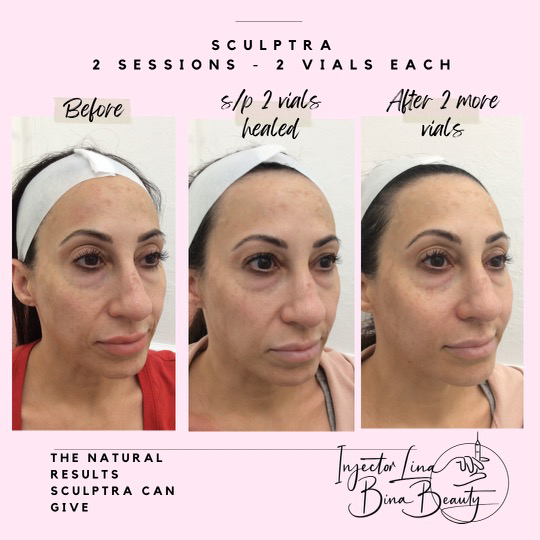
Sculptra isn’t a single visit treatment. Lina builds a plan around a series of sessions, spaced weeks apart, because collagen production is a gradual biological process and each session adds to what the last one started. You won’t leave with a dramatic before and after photo on day one. Instead, results build slowly and become visible over the following weeks as your body lays down new collagen, and friends are more likely to ask if you’ve been sleeping better than to notice a specific treatment. That gradual buildup is also part of why the results, once fully developed, hold up for a long time compared to a filler that the body metabolizes within a year or so.
Sculptra Aftercare and Recovery
After each Sculptra session, Lina will walk you through a short massage routine to do at home, since even distribution of the product under the skin affects how smoothly the final result settles in. Mild swelling, redness, tenderness, and small bumps at the injection sites are normal for the first few days and typically resolve on their own. Following the massage schedule and aftercare instructions Lina gives you will help support the treatment as the product settles.
Who Is Sculptra Best For?
Sculptra tends to suit patients in their 40s, 50s, and beyond who have noticed their face thinning rather than sagging, and who are comfortable committing to more than one appointment for a result that builds slowly. It isn’t the right starting point for someone who wants a visible change for an event next week, or who is looking to add volume to the lips rather than rebuild structure. Hideout Boutique sees Sculptra patients from Fort Myers, Cape Coral, Bonita Springs, Estero, and Naples who are ready to plan a treatment series rather than a single visit. Book a Sculptra consultation with Lina to find out how many sessions your face will need.
Frequently Asked Questions About Sculptra
Should I choose Sculptra or filler if I want a change before a specific event?
If you have a wedding, reunion, or photo shoot coming up, dermal filler can provide visible volume sooner, but we recommend scheduling filler at least two to four weeks before an event to give the treatment time to settle. Sculptra is built around a gradual timeline, so it’s a better match for someone planning further ahead.
How many sessions will a typical Sculptra treatment plan involve?
Most patients need two to three sessions spaced about four to six weeks apart, though the exact number depends on how much volume needs to be rebuilt and which areas you’re treating. Lina maps out a specific plan for you at your consultation.
How long do Sculptra results typically last?
Results build gradually over several months as your body produces new collagen, and once fully developed they can last up to about two years, considerably longer than most dermal fillers.
Will people be able to tell I’ve had a cosmetic treatment?
Most patients say the opposite happens: people notice they look rested or healthier without being able to pinpoint why. Because Sculptra rebuilds your own collagen rather than adding a foreign volume, the change tends to look like your face rather than an obvious add on.
Is there downtime after Sculptra?
Downtime is minimal. Most patients go back to normal activities the same day, though Lina recommends avoiding strenuous exercise, saunas, and sun exposure for about 24 hours and keeping up with the at home massage routine in the days after treatment.
Can Sculptra be combined with Botox or dermal filler?
Yes. Many patients pair Sculptra’s gradual collagen rebuilding with Botox for lines that come from muscle movement, since the two address different causes of aging and work well on the same treatment timeline.